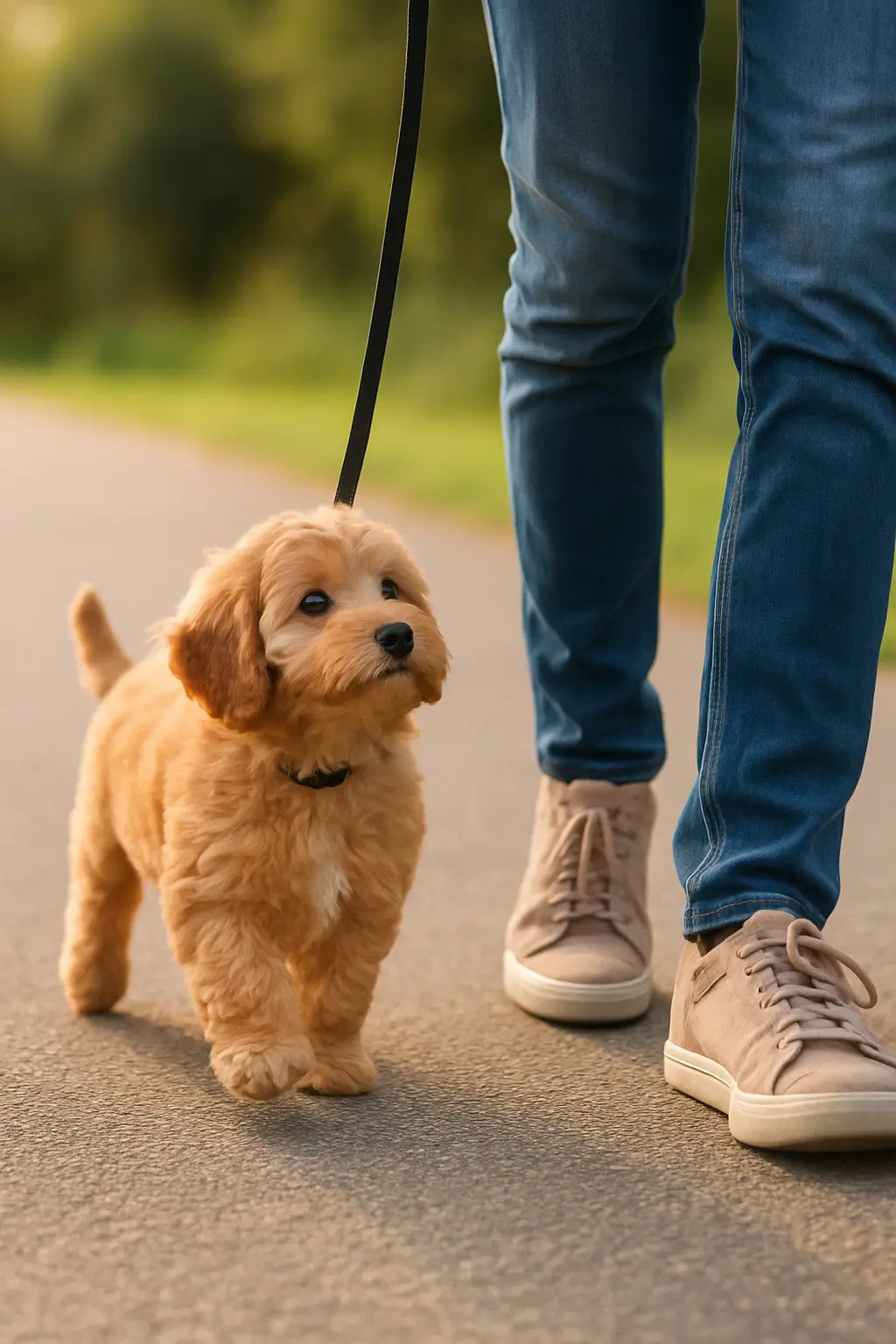

Updated August 2, 2026. This article provides general education and does not replace advice from your veterinarian, who should assess your puppy’s vaccination history and local disease risk.
An 8-week-old puppy can begin safe, controlled socialization, but one vaccine dose should not be treated as complete protection. Current WSAVA guidance recommends a series of core vaccines every 2–4 weeks, with the final puppy dose given at 16 weeks of age or older. Until your veterinarian confirms an appropriate plan, avoid dog parks, pet-store floors, communal relief areas, and other places heavily used by dogs of unknown vaccination status.
How to introduce the outdoors safely
- Ask your veterinarian about local risk. Parvovirus prevalence, your puppy’s vaccine dates, health, and planned activities all affect what is appropriate.
- Use lower-risk exposure. Carry your puppy, use a stroller, visit a clean private yard, or allow calm observation from a protected surface.
- Choose known dogs carefully. Interactions should be with healthy, appropriately vaccinated dogs in a controlled environment.
- Keep early sessions short. Start with a few calm minutes and watch for fatigue, freezing, hiding, tucked posture, or refusal of food.
- Use a secure harness or collar. Let the puppy become comfortable with it indoors before expecting loose-leash walking outside.
- Reward calm curiosity. Pair new sounds, surfaces, people, and movement with distance, choice, praise, and small appropriate treats.
- Do not force contact. Socialization means positive, controlled exposure—not greeting every person or dog.
What to do before public walks
Review the vaccination record with your veterinarian and ask when public ground-level walks are appropriate for your puppy. Seek veterinary advice promptly if the puppy develops vomiting, diarrhea, marked lethargy, loss of appetite, coughing, or other concerning signs.