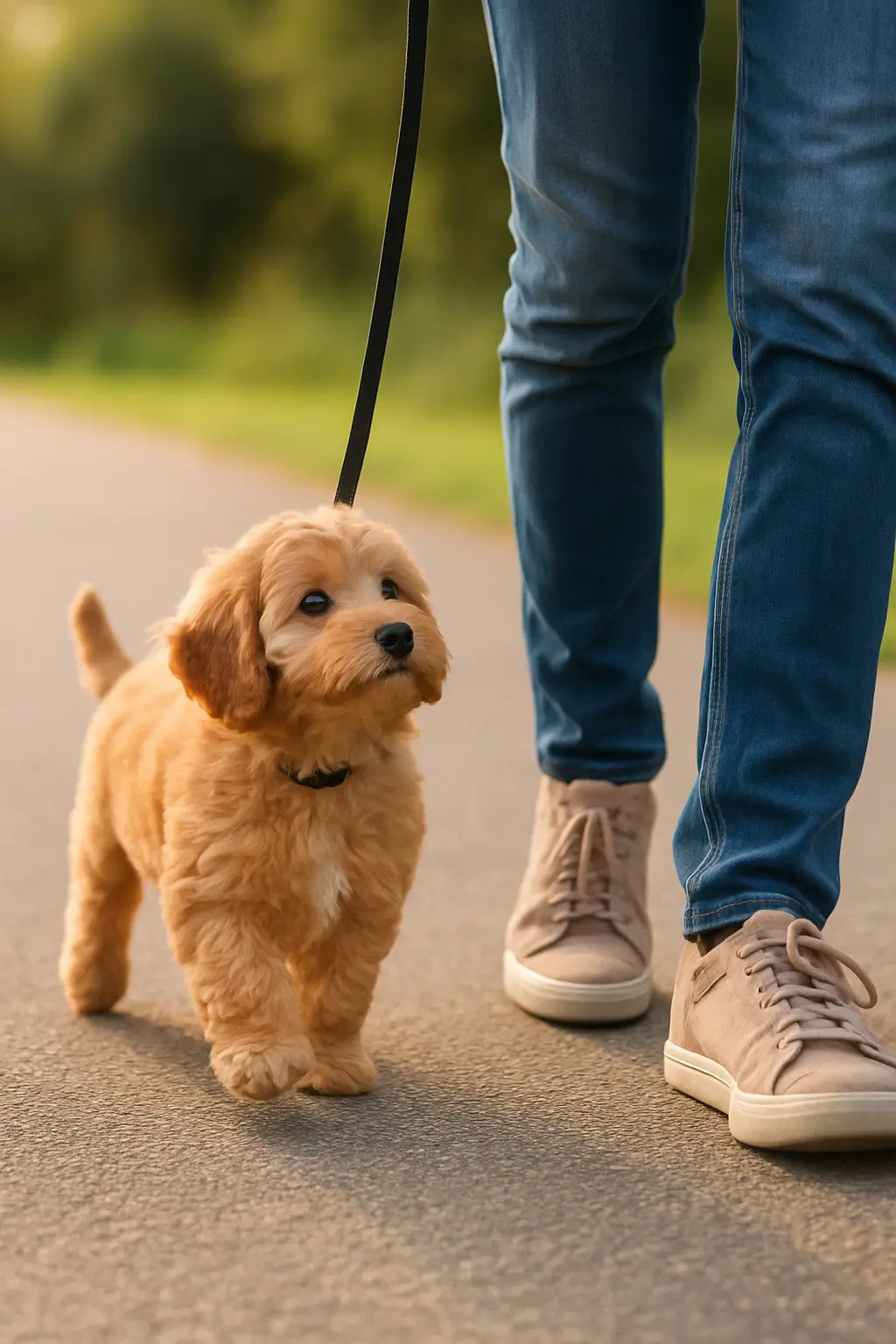

Updated August 2, 2026. This article provides general education. Your veterinarian should set the vaccination, parasite-control, and socialization plan based on the puppy’s records and local disease risk.
A puppy is not necessarily fully protected after the first or second vaccine. WSAVA recommends multiple core vaccine doses every 2–4 weeks, with the final puppy dose at 16 weeks of age or older. Protection and timing vary, so ask your veterinarian what exposure is appropriate at each stage.
Reduce infection risk without stopping all socialization
- Avoid high-risk ground. Until your veterinarian advises otherwise, avoid dog parks, pet-store floors, communal relief areas, and places heavily used by dogs of unknown health or vaccination status.
- Choose controlled contact. If your veterinarian agrees, use clean private spaces and interactions with healthy, appropriately vaccinated dogs whose history is known.
- Use lower-risk socialization. Carry the puppy, use a stroller or clean blanket, introduce household sounds and surfaces, and observe the world from a protected distance.
- Practice basic hygiene. Clean food and water bowls, bedding, toys, and soiled areas with products used according to their labels. Keep waste away from the puppy and wash hands after cleanup.
- Follow parasite prevention. Review deworming, fecal testing, flea and tick control, and other preventive care with your veterinarian.
Watch for signs of illness
Contact a veterinarian promptly for repeated vomiting or diarrhea, blood in stool, marked lethargy, loss of appetite, fever, coughing, nasal discharge, breathing difficulty, or sudden decline. Suspected parvovirus exposure or symptoms require urgent veterinary guidance.
Do not delay all positive social exposure until the entire vaccine series is complete without discussing the behavioral and disease risks with your veterinarian. The goal is a controlled plan that protects physical health while supporting healthy development.